May 7, 2025
 ipc - salary survey
Executive Employment Contract Survey Analysis: Zimbabwe
----------------------------------------------------------------------------------------------------
Executive Summary
This analysis examines executive employment contracts in Zimbabwe based on a survey of 57 HR professionals, each representing a different organization across the country. The findings reveal significant insights into how Zimbabwean organizations structure, manage, and terminate executive contracts, with a particular focus on both CEOs and their direct reports.
Key Findings:
- 60% of CEOs operate under permanent/indefinite contracts, while fixed-term arrangements (35%) are more prevalent in public sector and state-owned enterprises. For executives reporting to CEOs, permanent contracts are even more common at 70%.
- The most common duration for fixed-term CEO contracts is 5 years (40%), while executives typically have shorter terms of 3 years (40%), creating a tiered approach to commitment
aligned with organizational hierarchy. - Performance failure is the primary reason for early contract termination, accounting for 40% of CEO dismissals and 50% of executive dismissals, highlighting a clear performance-oriented approach across organizations.
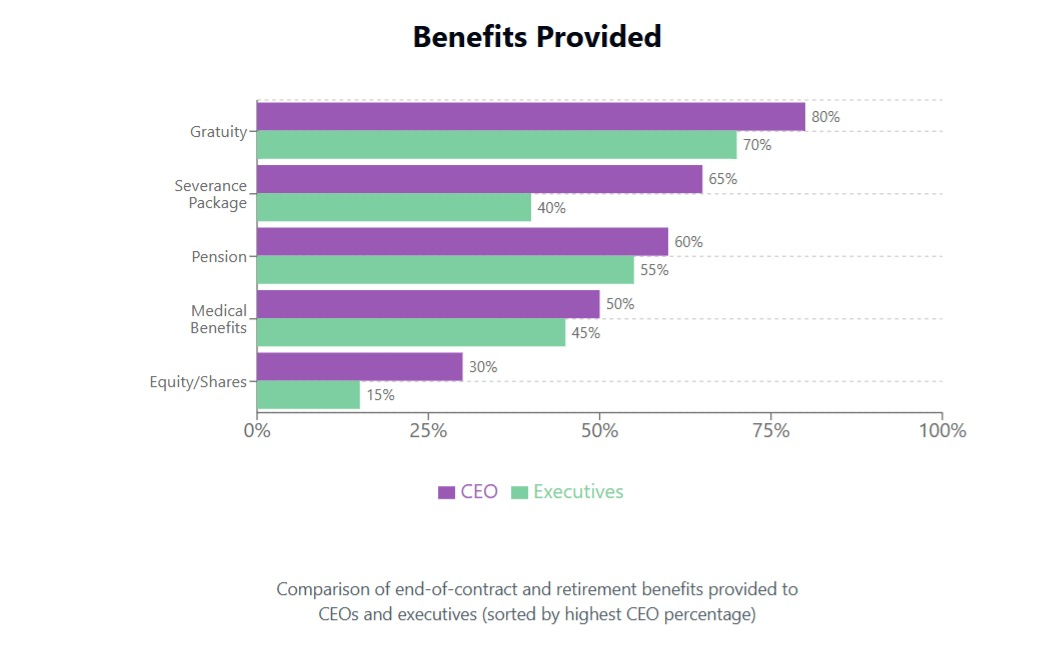
- Gratuity payments are the predominant benefit provided at contract expiry, with 80% of CEOs and 70% of executives receiving this benefit, typically structured as one month's salary per year of service.
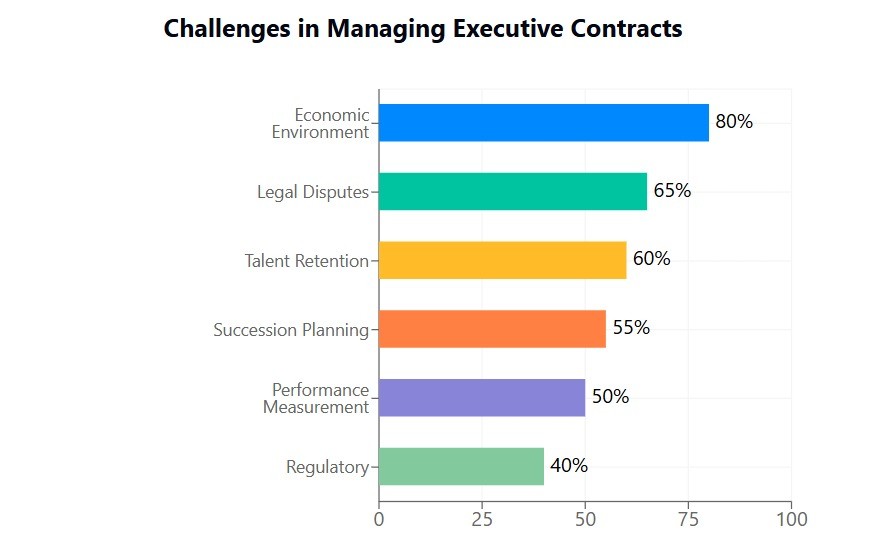
- Zimbabwe's economic environment presents the greatest contract management challenge (cited by 80% of respondents), followed by legal disputes (65%) and talent retention (60%).
- There is overwhelming support for performance-based contracts, with 75% of respondents supporting or strongly supporting increased implementation despite acknowledged
measurement challenges. - Financial services organizations lead in implementing sophisticated contract structures,
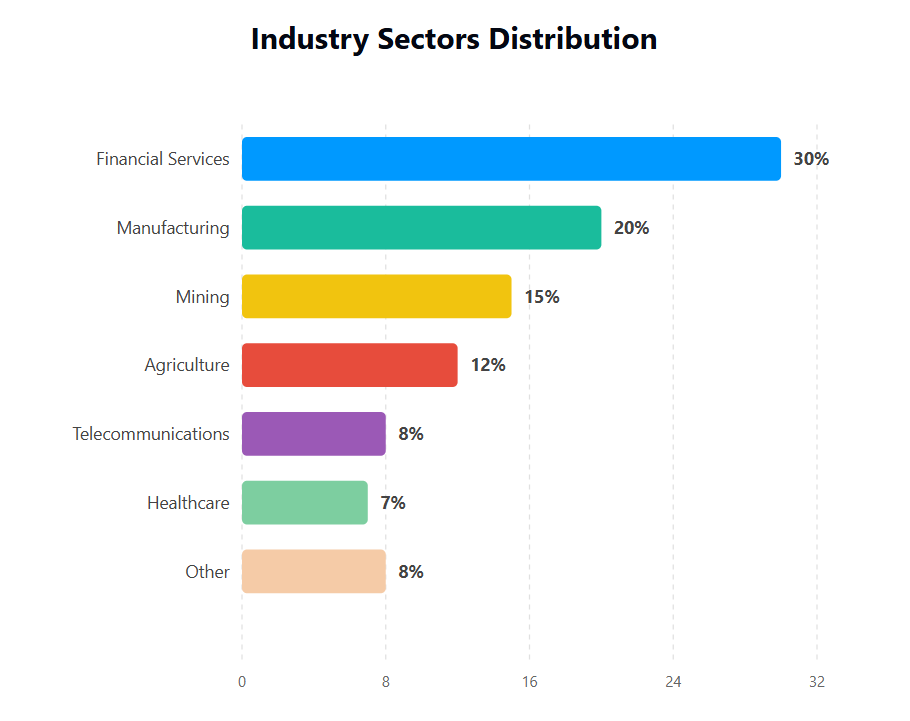
while the manufacturing and mining sectors feature longer contract durations that are aligned with their extended investment horizons.
Organization Demographics
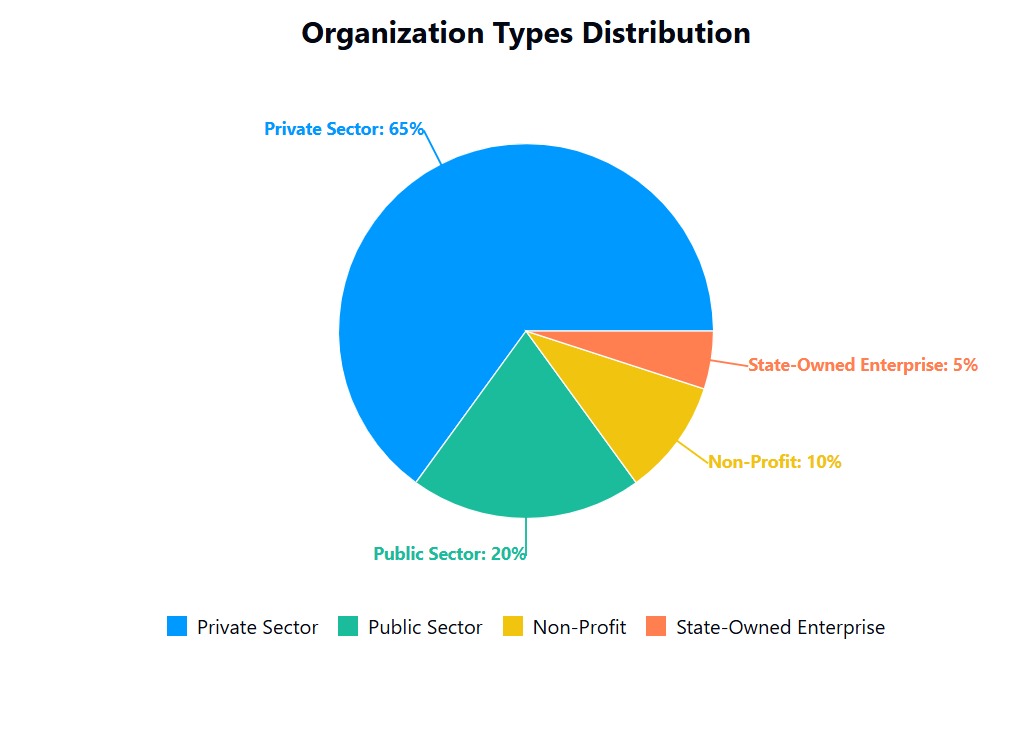
The survey captured responses from 57 HR professionals, each representing a unique organization operating in Zimbabwe. Private sector entities represented the largest portion of respondents (65%), followed by public sector organizations (20%), non-profit organizations (10%), and state-owned enterprises (5%).
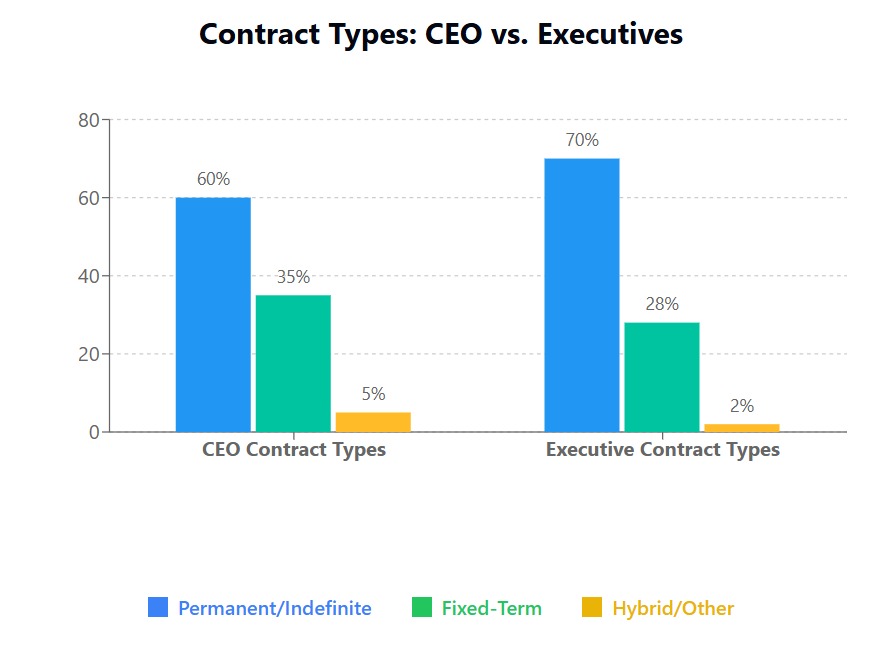
The survey reveals that permanent or indefinite contracts are the predominant arrangement for CEOs in Zimbabwe (60%), particularly in the private sector. Fixed-term contracts are more common in public sector organizations/state-owned enterprises. For executives reporting to CEOs, permanent arrangements are even more prevalent (70%), suggesting a difference in how organizations approach contract structures at different leadership levels
Challenges in Executive Contract Management
Organizations reported several significant challenges in managing executive contracts. Aligning contracts with Zimbabwe's dynamic economic environment emerged as the most pressing concern, with inflation, currency fluctuations, and regulatory changes creating complexities in structuring sustainable and competitive compensation packages.
Qualitative Insights: Open-Ended Responses
The survey included an open-ended question asking respondents to share additional comments, practices, or lessons learned regarding executive contract management in Zimbabwe. Analysis of these verbatim responses revealed several prominent themes that provide deeper context to the quantitative findings.
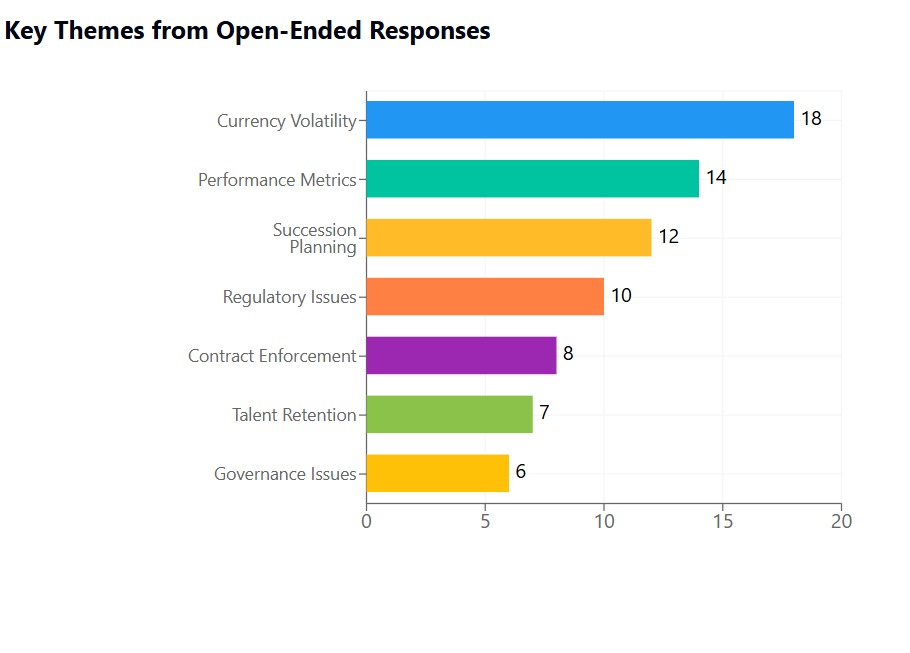
Currency Volatility emerged as the most frequently mentioned challenge in the open-ended responses, highlighted by 18 respondents. HR professionals emphasized the difficulty of maintaining equitable executive compensation amid Zimbabwe's fluctuating currency values.
Performance Metrics represented the second most common theme, with 14 respondents noting challenges in defining and measuring executive performance in Zimbabwe's dynamic business environment.
Recommendations
Based on the survey findings and analysis of current practices, several recommendations emerge for organizations seeking to optimize their executive contract management:
- Develop comprehensive executive contract frameworks that balance standardization with the necessary flexibility, ensuring consistency in core provisions while allowing customization to address specific roles and circumstances.
- Implement robust performance evaluation systems with clear, measurable criteria and transparent processes. Effective systems combine quantitative metrics with qualitative assessments and include both short term operational targets and long term strategic objectives.
- Strengthen governance processes surrounding executive contr acts, particularly regarding approval authorities, documentation requirements, and periodic review procedures.
- Address succession planning systematically integrating it with contract management to ensure smooth leadership transitions
Conclusion
Executive employment contracts represent critical instruments for organizational governance and leadership effectiveness. The survey findings reveal both established patterns and emerging trends in how organizations structure, manage, and terminate these important agreements.
As Zimbabwe's business environment continues to evolve, executive contract management practices will likely see further refinement and innovation. Organizations that approach these agreements strategically viewing them not merely as legal documents but as tools for organizational alignment and leadership effectiveness, will derive the greatest value.
Want more insights like this?
Subscribe to our HR Newsletter to receive the latest salary trends, HR best practices, and industry insights directly to your inbox.
Subscribe Now